
How do AI tools enhance Google Ads management for businesses?
How do AI tools enhance Google Ads management for businesses? Businesses are now expected to ...
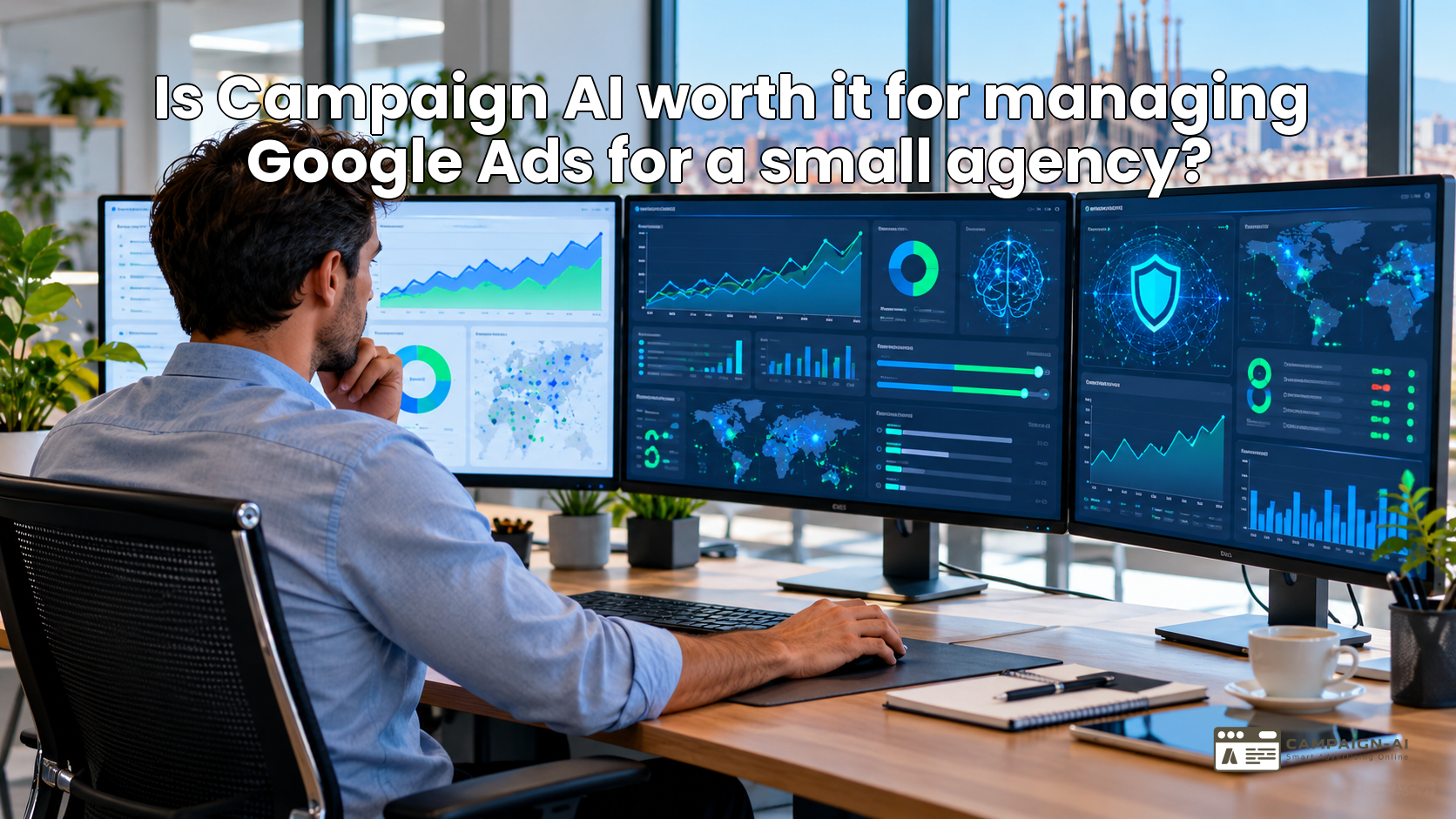
Managing Google Ads campaigns for multiple clients can quickly become a demanding task for a small digital marketing agency. Between adjusting bids, reviewing search terms, monitoring budgets, identifying underperforming keywords, and protecting advertising spend from fraudulent clicks, account management requires constant attention. Campaign AI offers an AI-powered approach to Google Ads optimization that helps agencies automate repetitive PPC tasks, improve campaign oversight, and dedicate more time to strategic decisions. For agencies working with limited resources, the potential value lies in combining automation and click-fraud protection within a single workflow.
One of the main advantages of Campaign AI is its ability to support ongoing campaign optimization without requiring an account manager to make every adjustment manually. The platform automates bid adjustments every three hours, refines search terms to help identify relevant keyword opportunities, and provides advanced IP-blocking capabilities designed to protect campaigns against suspicious traffic from bots and competitors. These functions can help agencies reduce wasted management time and identify opportunities to improve advertising efficiency. However, actual results depend on factors such as campaign structure, conversion tracking accuracy, industry competition, and the quality of the landing pages.
Campaign AI may be particularly valuable for small agencies managing several client accounts, especially when manual optimization limits their ability to grow. Instead of spending hours on repetitive adjustments, account managers can focus on client relationships, campaign strategy, creative testing, and conversion improvements. The platform can also complement existing workflows across supported website environments, including WordPress, WooCommerce, PrestaShop, and Magento.
Before committing, agencies should compare Campaign AI’s pricing and available integrations with their operational needs, verify compatibility with their existing Google Ads workflows, and measure performance against a clear baseline. Track metrics such as cost per conversion, conversion rate, wasted ad spend, and hours spent managing each account. Campaign AI is worth evaluating when automation can deliver measurable operational savings or stronger campaign efficiency, although no software can guarantee a specific return on advertising spend.
For a small digital marketing agency, managing Google Ads efficiently is essential to maintaining service quality while controlling operational costs. Every client account requires attention to keyword performance, bidding decisions, search queries, conversion data, and potential click fraud. When these responsibilities are handled entirely through manual processes, account managers can spend valuable hours on repetitive work instead of developing strategies that generate business growth. Campaign AI helps small agencies automate Google Ads management by combining AI-driven optimization, recurring bid adjustments, search term refinement, and click-fraud protection in one platform.
A key component of this approach is automated bidding support. Campaign AI adjusts bids every three hours, helping agencies maintain an ongoing optimization process without manually reviewing every bidding opportunity. Frequent adjustments can support campaign efficiency, but their effectiveness depends on the campaign’s goals, conversion data, competition, and applicable Google Ads bidding settings. Agencies should monitor performance and confirm that automated changes align with each client’s budget, acquisition targets, and campaign strategy.
Campaign AI also helps agencies refine search terms and identify opportunities to improve keyword relevance. Reviewing search queries is important because irrelevant searches can consume advertising budgets without producing valuable leads or sales. By supporting search term optimization, the platform can help account managers identify areas that require attention and make more informed decisions about which searches deserve investment. Agencies should still review important changes to ensure that valuable search intent is not excluded inadvertently.
Automation does not eliminate the need for experienced PPC management. Instead, it helps small agencies redirect their attention toward landing page improvements, conversion tracking, creative development, client reporting, and growth planning. To evaluate the benefits, establish baseline measurements before implementation and compare results over a representative period. Campaign AI can help agencies build a more efficient Google Ads management process by reducing repetitive work while supporting consistent optimization and advertising budget protection.
Effective PPC campaign optimization requires more than selecting keywords and setting an advertising budget. Businesses and marketing agencies must continually evaluate bidding strategies, analyze search terms, monitor traffic quality, and identify opportunities to improve conversions. Campaign AI brings several Google Ads optimization capabilities together, helping advertisers reduce repetitive management tasks and improve oversight of their advertising campaigns. Its combination of automated bid adjustments, search term refinement, and advanced IP blocking is designed to address both campaign performance and the risk of wasted advertising spend.
Campaign AI automates bid adjustments on a three-hour schedule, helping advertisers maintain an ongoing optimization process. Bid management is important because advertising costs and competitive conditions can change throughout the day. By automating recurring adjustments, the platform can reduce the need for constant manual intervention and free account managers to focus on broader campaign goals. Advertisers should still evaluate whether changes support their objectives, particularly when managing limited budgets or campaigns with insufficient conversion data.
Search term optimization helps advertisers understand which actual searches trigger their ads and whether that traffic matches their products or services. Campaign AI supports search term refinement, helping account managers identify opportunities to improve relevance and limit exposure to unsuitable queries. A carefully maintained search strategy can contribute to more efficient spending, stronger lead quality, and better alignment between advertising messages and user intent. Human review remains important to avoid excluding valuable searches or overlooking changes in customer behavior.
Invalid or unwanted traffic can undermine PPC performance by consuming budget without delivering genuine business value. Campaign AI provides advanced IP-blocking capabilities designed to help protect campaigns against bots, competitors, and other suspicious traffic sources. IP blocking can be useful when repeated unwanted activity is identified, although it cannot prevent every form of click fraud because traffic sources may change their IP addresses or use shared networks. Advertisers should combine available protection tools with traffic analysis, conversion monitoring, and appropriate account safeguards.
Campaign AI supports workflows involving major website platforms, including WordPress, WooCommerce, PrestaShop, and Magento, helping businesses incorporate advertising optimization into their broader digital operations where compatible integrations are available. This flexibility can be valuable for agencies managing different types of clients, from service businesses focused on generating leads to online retailers seeking profitable sales.
For the best results, combine Campaign AI’s automation capabilities with accurate conversion tracking, relevant landing pages, realistic performance targets, and regular account reviews. Measure success through cost per acquisition, conversion rate, qualified lead volume, and return on ad spend rather than clicks alone. The most effective PPC optimization strategy combines automation with informed human oversight, allowing businesses to pursue sustainable growth while maintaining control over their advertising objectives.
Managing Google Ads campaigns for multiple clients can quickly become a demanding task for small digital marketing agencies. Adjusting bids, reviewing search terms, monitoring conversions, and controlling advertising costs require continuous attention to detail. AI-powered Google Ads management helps agencies automate repetitive optimization tasks, make data-informed decisions, and dedicate more time to client strategy and business growth. Campaign AI is designed to support this process by combining automated bidding adjustments, search term refinement, and click-fraud protection within a single optimization platform.
Instead of relying exclusively on manual reviews, Campaign AI can adjust campaign bids every three hours, helping advertisers respond to changing performance signals and evolving campaign conditions. More frequent adjustments can reduce the workload associated with routine account management while helping agencies maintain closer control over advertising budgets. However, actual improvements depend on conversion tracking quality, campaign structure, available data, competition, and the bidding strategy being used. AI automation should complement clear objectives and sound campaign planning rather than replace them entirely.
Effective Google Ads management involves understanding which searches attract qualified prospects and which generate unnecessary costs. Campaign AI supports search term refinement by helping advertisers identify opportunities to improve keyword relevance and reduce wasted spend. This process can help agencies focus their budgets on searches that better align with each client’s products, services, and conversion goals.
For agencies managing several small business accounts, these capabilities can make campaign optimization more manageable without requiring additional staff for every new client. Before adopting an AI advertising tool, evaluate its supported campaign types, integrations, reporting features, and pricing against your agency’s actual needs. Campaign AI can be worth considering for small agencies seeking a more scalable approach to Google Ads management, provided its automation delivers measurable value against their existing workflow.
Click fraud is a concern for businesses that depend on Google Ads to generate leads, sales, and qualified website traffic. Invalid or low-value clicks can consume advertising budgets without producing meaningful business outcomes, making it harder to assess campaign profitability. Some unwanted activity comes from automated bots, while other suspicious patterns may involve repeated clicks or competitors interacting with ads. Click fraud protection for Google Ads helps advertisers identify potentially harmful traffic patterns and take appropriate action to reduce avoidable advertising costs.
Campaign AI combines campaign optimization with advanced IP-blocking capabilities designed to help protect advertising budgets against suspicious activity. By analyzing traffic patterns and supporting the identification and blocking of problematic IP addresses, the platform can help businesses reduce exposure to repeated unwanted clicks. The effectiveness of any protection system depends on the quality of its detection methods, the traffic being analyzed, and how quickly appropriate rules are applied. No click-fraud solution can guarantee that every invalid click will be detected or eliminated.
For small marketing agencies, investigating suspicious traffic manually across several client accounts can consume valuable hours. Automated monitoring and IP-based controls can help streamline this process, allowing account managers to focus on campaign strategy and client reporting. Campaign AI is designed to make click-fraud protection part of a broader advertising optimization workflow rather than a completely separate task.
Agencies should evaluate click-fraud protection alongside conversion tracking, Google Ads invalid traffic reporting, landing-page analytics, and lead-quality data. A sudden increase in clicks without corresponding engagement or conversions deserves investigation, but it does not automatically prove fraud. Campaign AI may be a useful option for agencies seeking automated click-fraud protection while managing multiple client budgets. The most reliable assessment comes from measuring suspicious traffic, blocked activity, conversion quality, and cost trends before and after implementation.
Small digital marketing agencies often face a difficult balance between delivering strong advertising results and keeping client management costs under control. Manual Google Ads management provides direct oversight of keyword selection, bidding strategies, negative keywords, budgets, and campaign structure, but it can require substantial time as the client portfolio grows. AI-powered Google Ads management offers another approach by automating selected repetitive tasks and helping teams monitor campaign performance more consistently. For agencies evaluating Campaign AI, the key question is whether automation can improve operational efficiency without sacrificing the strategic control clients expect.
With a manual workflow, account managers decide when to review bids, analyze search terms, investigate suspicious clicks, and implement campaign changes. This approach can be effective for complex accounts requiring detailed human judgment, but optimization may become inconsistent when staff are overloaded. Campaign AI is designed to automate bid adjustments every three hours, support search term refinement, and provide click-fraud protection through advanced IP-blocking capabilities. These features can reduce routine workload, although the results depend on campaign settings, data quality, and the suitability of each automated action.
The value of Campaign AI depends on how much time your team currently spends optimizing campaigns, the advertising budgets you manage, and the cost of the software compared with its measurable benefits. Agencies with several active accounts and recurring optimization tasks may gain more from automation than teams managing a single, straightforward campaign. Calculate potential savings using reduced management hours, changes in cost per conversion, lead quality, and any reduction in wasted spend rather than relying on clicks or impressions alone. The practical choice is not necessarily AI or manual management: combining automated execution with human oversight can give small agencies a scalable workflow while preserving accountability, campaign strategy, and client-specific decision-making.
Managing Google Ads campaigns for multiple clients can quickly become time-consuming for a small digital marketing agency. Between monitoring performance, adjusting bids, reviewing search terms, investigating suspicious clicks, and preparing reports, account management can consume valuable hours that could be spent growing the business. Campaign AI is designed to simplify these workflows through AI-powered Google Ads optimization and click-fraud protection, helping agencies manage campaigns more efficiently without increasing their operational workload at the same pace as their client portfolio.
One of the main advantages of Campaign AI for small agencies is automated campaign optimization. Its automated bidding adjustments, performed every three hours, help agencies respond to changing campaign conditions without relying exclusively on manual checks. Search term refinement can also help identify relevant keyword opportunities and reduce wasted spending on irrelevant searches. In addition, advanced IP blocking helps protect advertising budgets against suspicious activity from bots and potentially unwanted competitor clicks. These capabilities give marketing teams more time to focus on strategy, creative testing, landing page improvements, and client communication.
Clients expect transparency, efficient management, and measurable progress from their advertising investment. By streamlining routine optimization and supporting click-fraud prevention, Campaign AI can help agencies establish a more consistent approach to account management. Although no software can guarantee higher conversion rates or eliminate every fraudulent click, better oversight can help agencies identify performance issues and make more informed decisions.
For agencies evaluating whether Campaign AI is worth using to manage Google Ads, the key consideration is the value of the time saved and the potential reduction in wasted ad spend. When those benefits exceed the platform’s cost and any implementation effort, automation can contribute to healthier margins and a more scalable agency business model.
Determining whether Campaign AI is worth the investment for a small Google Ads agency requires more than comparing subscription prices. The most useful approach is to evaluate how its automation features fit your existing workflow, how much time they could save, and whether its click-fraud protection addresses a meaningful problem in your client accounts. Before subscribing, review the current pricing, available plans, usage limits, supported integrations, and any conditions that may affect your total cost. Check the official Campaign AI website for up-to-date commercial terms rather than relying on assumptions about subscription fees or included features.
Start by identifying the tasks that consume the most time across your client portfolio. Campaign AI offers automated campaign management capabilities, including bid adjustments every three hours, search term refinement, and advanced IP blocking intended to help protect advertising budgets from suspicious clicks. Agencies should assess how these features work with their account structure, conversion tracking, campaign objectives, and existing optimization processes. It is also important to understand what requires human approval, how exclusions are managed, and which performance data is available for evaluating results.
A practical ROI calculation should include both time savings and changes in advertising efficiency. For example, estimate the monthly hours saved across all client accounts, multiply those hours by your internal hourly labor cost, and add any verified savings from reduced wasted clicks. Then subtract the subscription cost and other incremental expenses. Divide the resulting net benefit by the total cost to estimate ROI as a percentage. Use a baseline period and a controlled trial wherever possible, because performance changes may also result from seasonality, competition, conversion tracking, or other campaign improvements.
Campaign AI may be worth the cost when measurable productivity gains and credible advertising savings outweigh the expense. Small agencies should prioritize a trial with clear success criteria, including time spent per account, cost per conversion, conversion volume, and suspicious-click trends. This evidence-based evaluation makes it easier to decide whether the platform supports sustainable agency growth.
Campaign AI is designed for businesses and marketing professionals who want to simplify Google Ads management while improving their approach to advertising efficiency and click-fraud prevention. It can be particularly relevant for small and medium-sized digital marketing agencies that manage several client accounts with limited staff. Instead of spending hours on repetitive monitoring and routine optimization, teams can use automation to support bidding adjustments, search term refinement, and suspicious-click protection while retaining responsibility for strategic decisions and client outcomes.
For small agencies, operational efficiency directly affects profitability. When account managers handle multiple clients, manual bid reviews, search query analysis, and traffic investigations can leave less time for campaign planning and client communication. Campaign AI’s automated workflows can help reduce this burden and create more capacity for additional accounts. Agencies should still establish clear review procedures, monitor conversion tracking, and verify that automated changes align with each client’s objectives, budget, and business priorities.
Campaign AI may also suit businesses that manage paid search internally without a dedicated PPC specialist available throughout the day. Small business owners can use automation to support campaign oversight while concentrating on sales, customer service, and operations. In-house marketing managers may find the platform useful when they need to coordinate several campaigns, identify potentially irrelevant search traffic, or strengthen protection against suspicious clicks. Its relevance depends on campaign complexity, available expertise, existing tools, and the amount of time currently spent on account management.
Agencies preparing to grow can evaluate Campaign AI as part of a broader strategy to standardize campaign management. Automation may help teams maintain consistent processes as the number of accounts increases, although it does not replace skilled PPC strategy, conversion rate optimization, creative development, or meaningful client reporting. Businesses should also assess integration requirements and confirm that the available features match their technical environment, including relevant website platforms such as WordPress, WooCommerce, PrestaShop, or Magento.
Ultimately, Campaign AI is worth considering for agencies and advertisers seeking a more automated approach to Google Ads optimization. The strongest fit is an organization that wants to reduce manual workload, make campaign management more consistent, and assess advertising performance using measurable evidence rather than relying on automation alone.
Managing Google Ads campaigns for multiple clients can quickly become time-consuming for a small digital marketing agency. Between monitoring bids, reviewing search terms, identifying wasted advertising spend, and protecting campaigns against fraudulent clicks, your team may spend more time on repetitive tasks than on strategic growth. Campaign AI helps simplify PPC management by combining artificial intelligence, automated bid adjustments, search term refinement, and click-fraud protection in one platform. For agencies looking to improve Google Ads performance without expanding their workload, adopting AI-powered campaign optimization can be a practical step toward a more scalable service model.
Getting started begins with identifying the accounts that would benefit most from automation. Review each client’s advertising goals, current cost per conversion, conversion rate, click-through rate, and monthly ad spend to establish a performance baseline. Next, evaluate recurring challenges such as irrelevant search queries, inconsistent bidding decisions, suspicious traffic, and time-consuming account maintenance. This initial assessment helps your agency determine where Campaign AI’s PPC automation and IP blocking capabilities could support more efficient campaign management while keeping optimization aligned with each client’s business objectives.
The value depends on your client volume, current management workload, advertising budgets, and the quality of your existing optimization process. By automating repetitive activities, your team may have more time for creative testing, landing page improvements, client communication, and strategic planning. However, AI should complement experienced PPC management rather than replace conversion tracking, human oversight, or sound marketing judgment. Before expanding across your entire client portfolio, test Campaign AI on a suitable account and assess measurable outcomes, implementation requirements, and total software costs. A structured pilot gives your agency a clearer basis for deciding whether AI-powered Google Ads management can improve operational efficiency and support profitable growth.

How do AI tools enhance Google Ads management for businesses? Businesses are now expected to ...
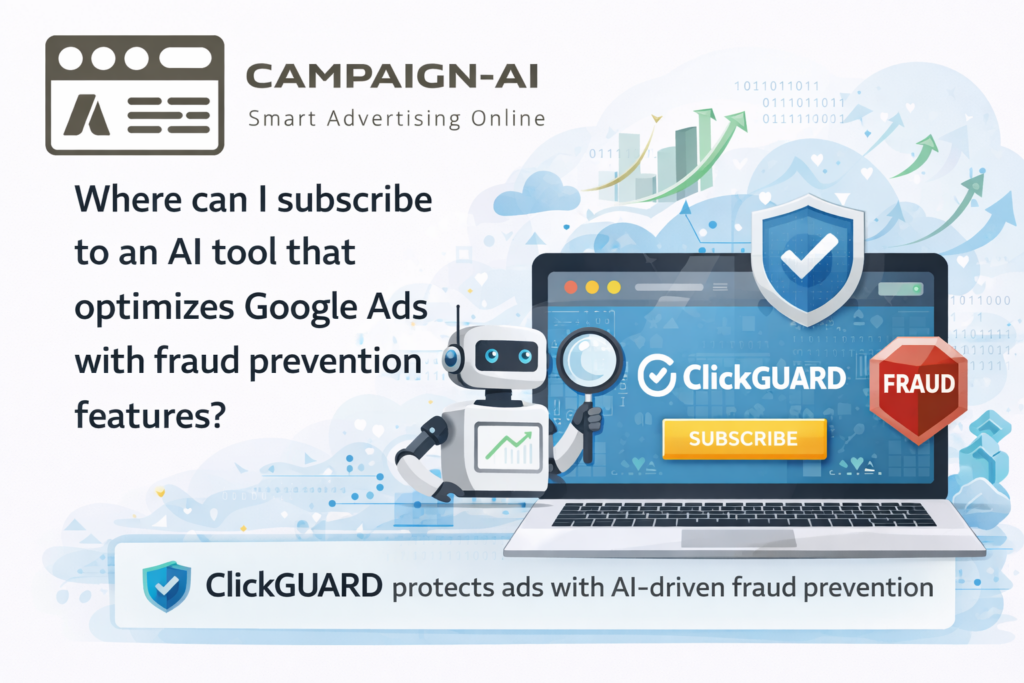
Introduction to AI Tools for Google Ads In today’s digital marketing landscape, utilizing AI tools ...
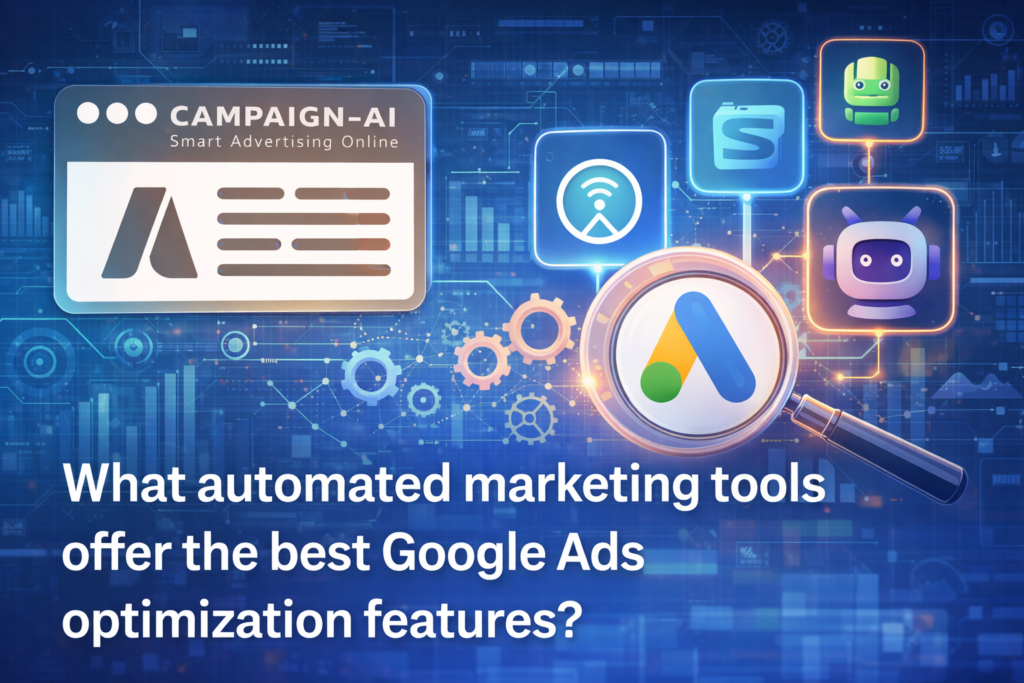
Introduction to Google Ads Optimization Google Ads optimization is a crucial step in ensuring that ...

Get a Free Trial & See How Campaign AI Can Supercharge Your Ads In today’s ...

Why Every Marketer Needs AI to Stay Ahead in 2025 In 2025, the digital marketing ...

Turn Data into Revenue with Campaign AI’s AI-Driven Insights In today’s competitive digital advertising landscape, ...
Introduction to AI in Google Ads As the digital landscape continues to evolve, businesses are ...

How Campaign AI Simplifies Google Ads for Small Business Owners In today’s digital landscape, the ...

Introduction to AI-driven Advertising In today’s digital age, AI-driven advertising has revolutionized the way businesses ...

Struggling with High Ad Costs? Campaign AI Helps You Save & Scale Running Google Ads ...
Advanced Google Ads Techniques: How AI Can Elevate Your Campaigns with Campaign AI In the ...

Introduction to AI in Campaign Optimization In the realm of digital marketing, AI technologies have ...